

HubSpot
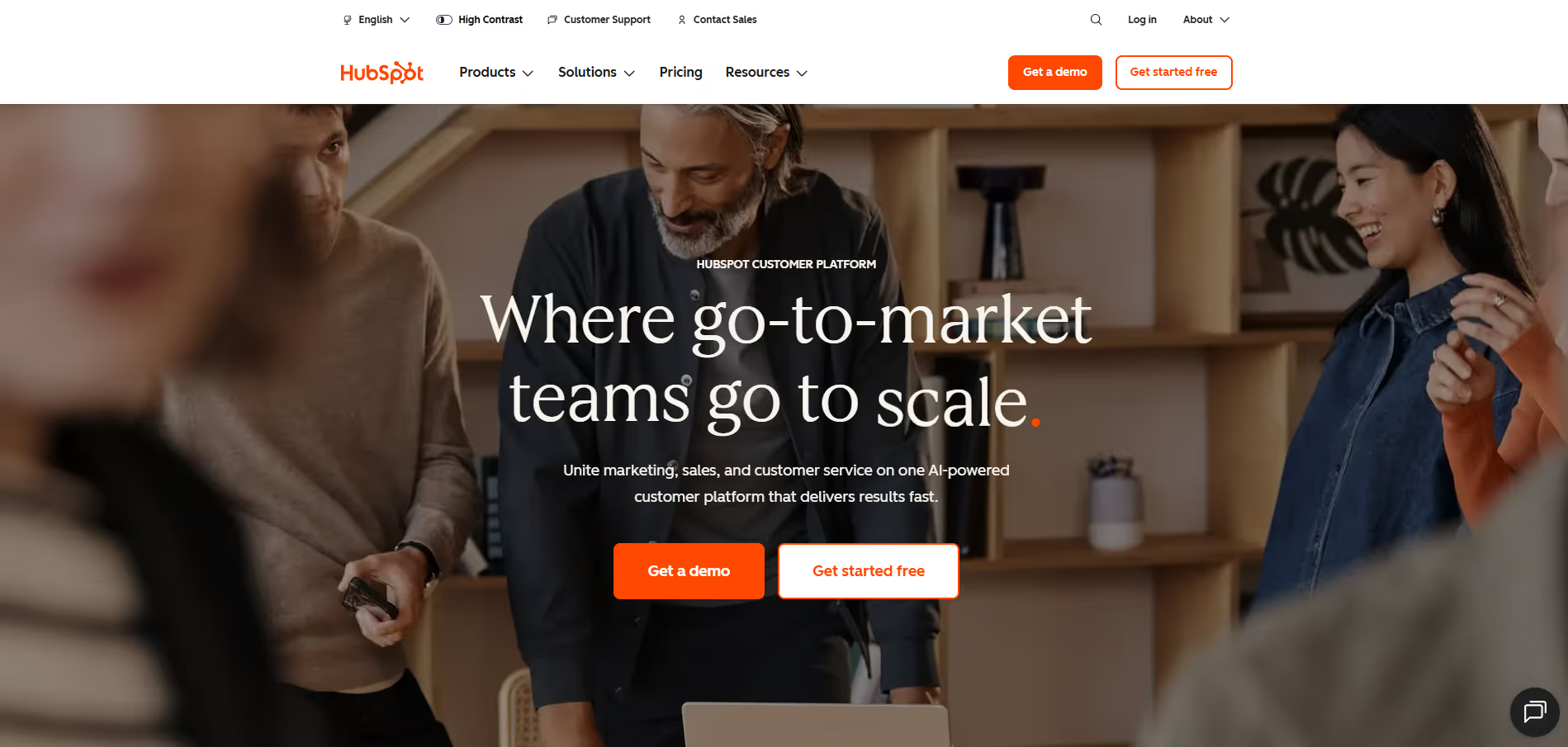
HubSpot is a comprehensive cloud-based platform offering a full suite of software for customer relationship management (CRM.
Our take: HubSpot is far more than a marketing automation tool — it's a full CRM suite with five distinct Hubs (Marketing, Sales, Service, CMS, Operations) that share a unified contact database.
The gold standard all-in-one CRM for growing teams willing to invest in the ecosystem — but budget carefully once you outgrow the free tier.
Our score
Reviewed by the Conversion Gems editorial team. Hover a facet to focus it; click to pin.Tap a facet to focus it.
Community ratings
Shown for context only. Our score is independent.
 G2
G2 Trustpilot
4.3 / 5 aggregate · across 2 sources
Third-party ratings shown verbatim; aggregate weighted by review volume.
What it is, and why we rate it
One line each. Open a row for detail.
Our takeHubSpot is far more than a marketing automation tool — it's a full CRM suite with five distinct Hubs (Marketing, Sales, Service, CMS, Operations) that share a unified contact database.
Why we rate itHubSpot's strength is its depth-and-breadth combination: robust free CRM that genuinely hooks teams, a tightly integrated paid stack, and one of the richest self-serve education ecosystems (HubSpot Academy) in the industry.
Best / not good for
- Growing SMB and mid-market teams wanting CRM, marketing, and support in one system
- Inbound marketing practitioners who lean on content, SEO, and lead nurturing workflows
- RevOps teams needing a single source of truth across marketing, sales, and service
- Budget-constrained startups that need advanced automation — costs jump sharply at Professional
- Enterprises with complex, custom CRM requirements better served by Salesforce or bespoke builds
- Teams that only need standalone email marketing — cheaper point tools exist
Friction report
Trade-offs to know before signing up.
- Time to valueFast for the free CRM — teams can log deals and contacts within minutes. Moderate for Marketing/Sales Hub paid tiers, where onboarding flows and integrations add setup time.
- Scale breakpointPer-seat pricing combined with contact-tier limits and mandatory onboarding fees creates significant cost spikes at Professional and Enterprise levels; large sales teams can find it pricier than Salesforce at volume.
- Walled gardenModerate: data exports exist and the API is solid, but workflows, sequences, and reports are deeply coupled to HubSpot's data model — migrating off is non-trivial.
A look inside
Frequently Asked Questions
What is HubSpot and what is it used for?
How does HubSpot simplify CRM and business management?
What features does HubSpot offer?
Is HubSpot suitable for beginners?
Who should use HubSpot and what benefits can they expect?
Alternatives
Conversion Gems independently reviews every tool.